- Services
- Insights
- Partners
- About
Revolutionising how digital healthcare works

The Challenge
The Challenge
With more than 150,000 health and fitness apps available, there's never been a greater opportunity for members of the public to manage their own health.
But surprisingly there's a negative correlation between the app ratings shown in app stores and the effectiveness of those apps when put to the test. For this reason it's difficult for healthcare professionals to recommend apps with any confidence to their patients. And, at the same time, patients don't have any guarantees that the apps they are downloading have been checked by healthcare professionals.
This is why Public Health England (PHE) set us the task of defining an end-to-end digital service that assesses healthcare apps, promoting their use and development, whilst minimising risks and misinformation.
The main objectives were to:
Develop a way to properly assess apps that allows healthcare professionals to recommend apps with confidence to patients, helping those patients to manage their own health and fitness.
Work out how to overcome key challenges such as deciding who should assess each app, ensuring there are no conflicts of interest for assessors, managing app updates, and ensuring the security and protection of patients' healthcare data.
Provide a clear picture of how people currently discover health apps, and what influences their choices.
Define the skills, incentives, and processes required for a community of professionals to effectively assess apps and give recommendations on which ones to use.
With more than 150,000 health and fitness apps available, there's never been a greater opportunity for members of the public to manage their own health.
But surprisingly there's a negative correlation between the app ratings shown in app stores and the effectiveness of those apps when put to the test. For this reason it's difficult for healthcare professionals to recommend apps with any confidence to their patients. And, at the same time, patients don't have any guarantees that the apps they are downloading have been checked by healthcare professionals.
This is why Public Health England (PHE) set us the task of defining an end-to-end digital service that assesses healthcare apps, promoting their use and development, whilst minimising risks and misinformation.
The main objectives were to:
Develop a way to properly assess apps that allows healthcare professionals to recommend apps with confidence to patients, helping those patients to manage their own health and fitness.
Work out how to overcome key challenges such as deciding who should assess each app, ensuring there are no conflicts of interest for assessors, managing app updates, and ensuring the security and protection of patients' healthcare data.
Provide a clear picture of how people currently discover health apps, and what influences their choices.
Define the skills, incentives, and processes required for a community of professionals to effectively assess apps and give recommendations on which ones to use.
WHAT WE DELIVERED
Best Practice & Governance
Digital Roadmap Development
Experience Optimisation
What we did
What we did
The potential impact of this initiative, across both the public and the NHS, was far reaching, and so the stakes were incredibly high. That's why putting together a robust service design approach was going to be key to success:
We started by engaging with lots of key stakeholders across PHE, NHS Digital, and NICE (National Institute for Health and Care Excellence) to get buy-in and establish a shared vision for the app assessment process.
We carried out in-depth interviews with app developers to understand how the creators of these products worked with wider health bodies. It became clear that getting a level of NHS endorsement for the best products would be essential.
We also conducted a lot of interviews with healthcare professionals and ran focus groups with end users of health apps. From this we started to define a scalable service design for an app assessment process that would develop over time.
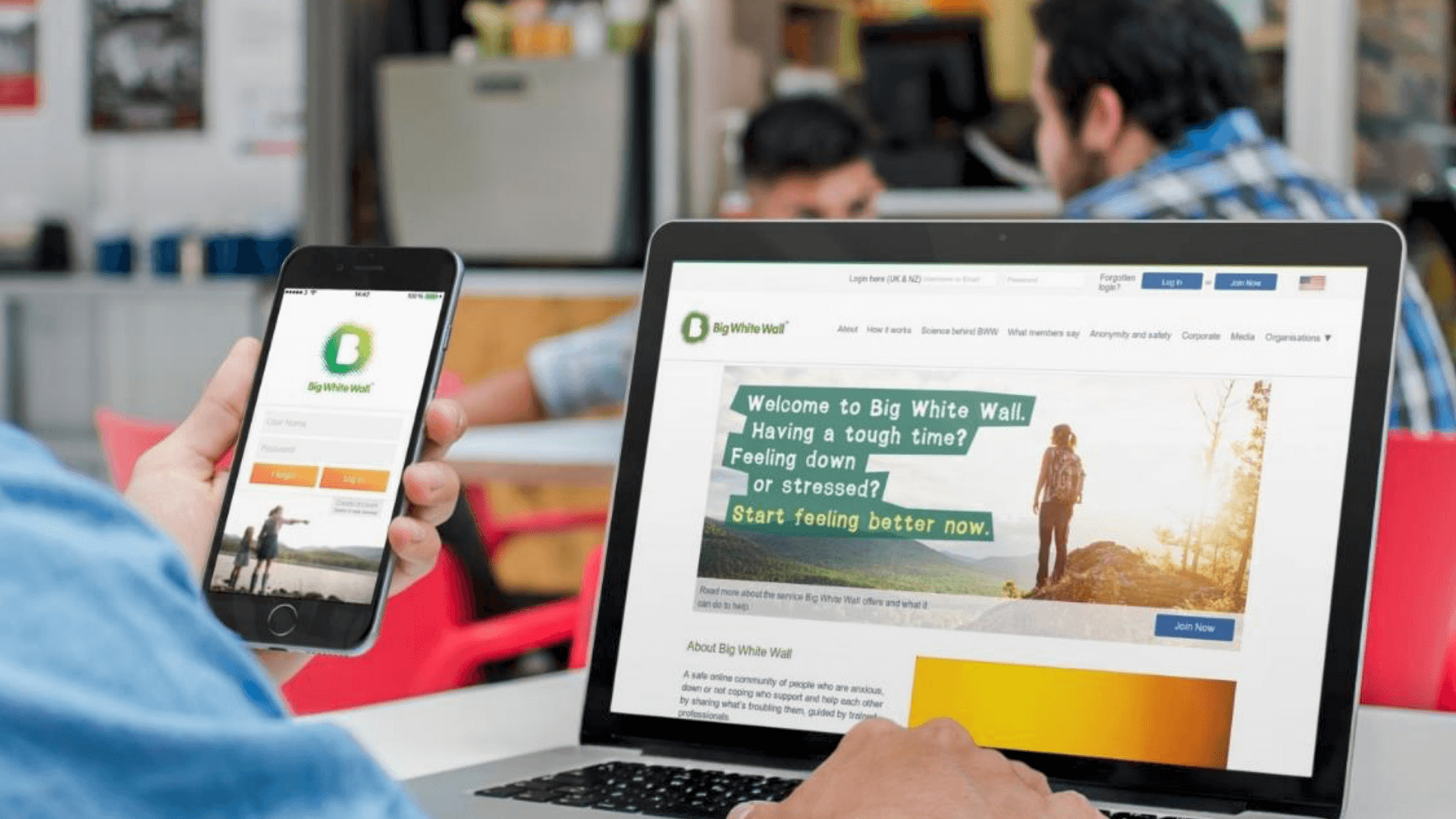
We focussed on key healthcare areas including diabetes and mental health and brought in developers and healthcare professionals to assess a range of apps in person. This allowed us to identify the touch-points, content, and processes needed to effectively assess apps.
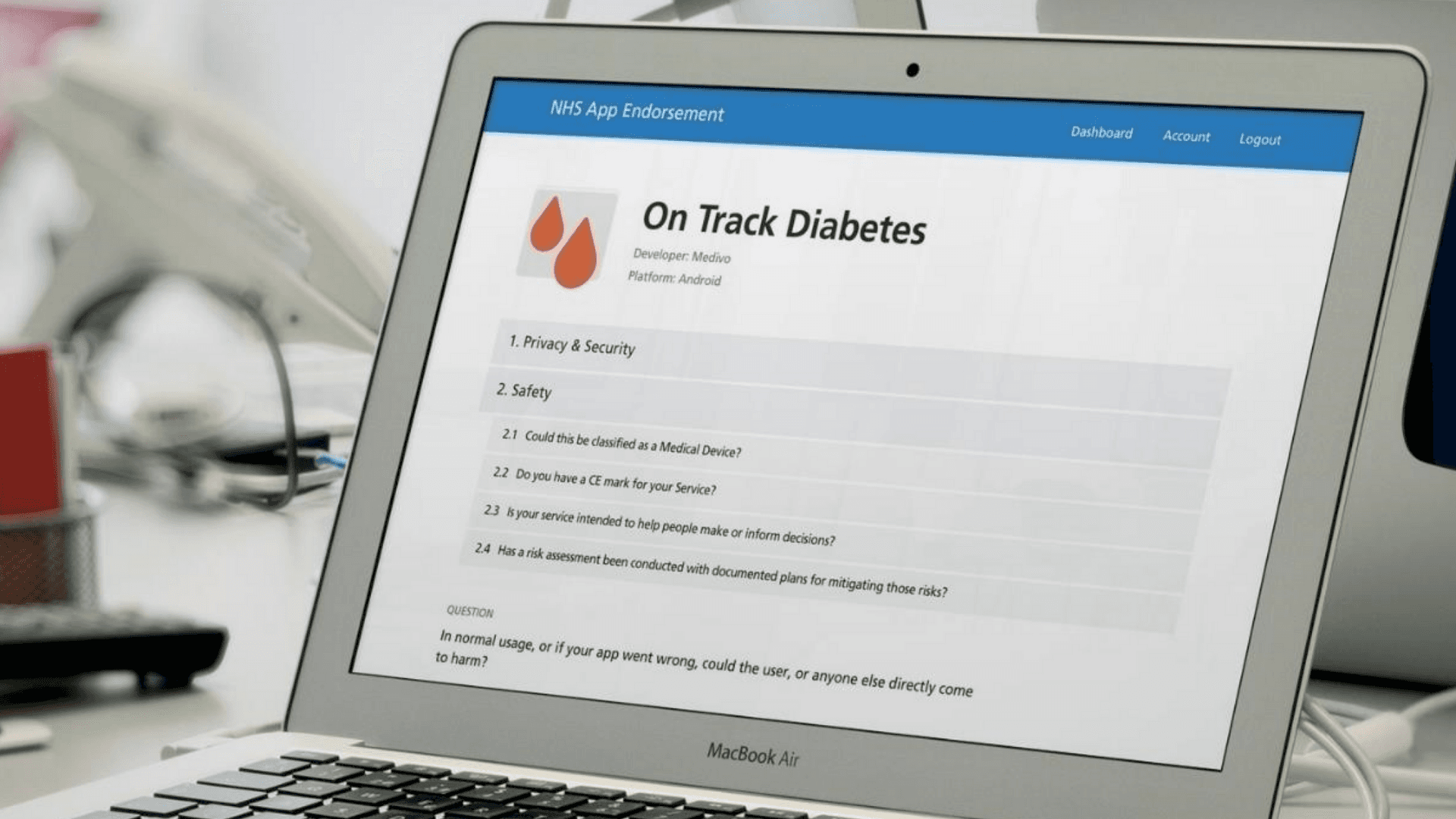
We used our learnings to quickly put together an online service and test a more complete process with healthcare professionals, getting their feedback to further develop the wider service design.
We delivered a detailed blueprint for an app assessment service, including processes, roles, partners, and touch-points, involving NHS Digital, doctors, and academics, with governance and leadership from PHE.
The potential impact of this initiative, across both the public and the NHS, was far reaching, and so the stakes were incredibly high. That's why putting together a robust service design approach was going to be key to success:
We started by engaging with lots of key stakeholders across PHE, NHS Digital, and NICE (National Institute for Health and Care Excellence) to get buy-in and establish a shared vision for the app assessment process.
We carried out in-depth interviews with app developers to understand how the creators of these products worked with wider health bodies. It became clear that getting a level of NHS endorsement for the best products would be essential.
We also conducted a lot of interviews with healthcare professionals and ran focus groups with end users of health apps. From this we started to define a scalable service design for an app assessment process that would develop over time.
We focussed on key healthcare areas including diabetes and mental health and brought in developers and healthcare professionals to assess a range of apps in person. This allowed us to identify the touch-points, content, and processes needed to effectively assess apps.
We used our learnings to quickly put together an online service and test a more complete process with healthcare professionals, getting their feedback to further develop the wider service design.
We delivered a detailed blueprint for an app assessment service, including processes, roles, partners, and touch-points, involving NHS Digital, doctors, and academics, with governance and leadership from PHE.
The Results
The Results
We've created a scalable plan of action to address an enormous problem, solving a complex issue at a national level.
A number of national organisations have now started using our process to provide the first batch of assessed apps, which were initially promoted as part of a brand-new NHS Digital Apps Library. Since then the NHS has begun to promote recommended apps at appropriate points across its website.
We've created a scalable plan of action to address an enormous problem, solving a complex issue at a national level.
A number of national organisations have now started using our process to provide the first batch of assessed apps, which were initially promoted as part of a brand-new NHS Digital Apps Library. Since then the NHS has begun to promote recommended apps at appropriate points across its website.
Trying to create this process was incredibly complex - a bit like hitting a moving target. The experience design team helped find the answers to a lot of difficult issues and designed a service ready to be deployed into the real world.
Diarmaid Crean, deputy director digital, Public Health England
Trying to create this process was incredibly complex - a bit like hitting a moving target. The experience design team helped find the answers to a lot of difficult issues and designed a service ready to be deployed into the real world.
Diarmaid Crean, deputy director digital, Public Health England
Trying to create this process was incredibly complex - a bit like hitting a moving target. The experience design team helped find the answers to a lot of difficult issues and designed a service ready to be deployed into the real world.
Diarmaid Crean, deputy director digital, Public Health England
Trying to create this process was incredibly complex - a bit like hitting a moving target. The experience design team helped find the answers to a lot of difficult issues and designed a service ready to be deployed into the real world.
Diarmaid Crean, deputy director digital, Public Health England
Trying to create this process was incredibly complex - a bit like hitting a moving target. The experience design team helped find the answers to a lot of difficult issues and designed a service ready to be deployed into the real world.
Diarmaid Crean, deputy director digital, Public Health England
Trying to create this process was incredibly complex - a bit like hitting a moving target. The experience design team helped find the answers to a lot of difficult issues and designed a service ready to be deployed into the real world.
Diarmaid Crean, deputy director digital, Public Health England
Trying to create this process was incredibly complex - a bit like hitting a moving target. The experience design team helped find the answers to a lot of difficult issues and designed a service ready to be deployed into the real world.
Diarmaid Crean, deputy director digital, Public Health England
Trying to create this process was incredibly complex - a bit like hitting a moving target. The experience design team helped find the answers to a lot of difficult issues and designed a service ready to be deployed into the real world.
Diarmaid Crean, deputy director digital, Public Health England
Trying to create this process was incredibly complex - a bit like hitting a moving target. The experience design team helped find the answers to a lot of difficult issues and designed a service ready to be deployed into the real world.
Diarmaid Crean, deputy director digital, Public Health England
Trying to create this process was incredibly complex - a bit like hitting a moving target. The experience design team helped find the answers to a lot of difficult issues and designed a service ready to be deployed into the real world.
Diarmaid Crean, deputy director digital, Public Health England
Trying to create this process was incredibly complex - a bit like hitting a moving target. The experience design team helped find the answers to a lot of difficult issues and designed a service ready to be deployed into the real world.
Diarmaid Crean, deputy director digital, Public Health England
Trying to create this process was incredibly complex - a bit like hitting a moving target. The experience design team helped find the answers to a lot of difficult issues and designed a service ready to be deployed into the real world.
Diarmaid Crean, deputy director digital, Public Health England
Trying to create this process was incredibly complex - a bit like hitting a moving target. The experience design team helped find the answers to a lot of difficult issues and designed a service ready to be deployed into the real world.
Diarmaid Crean, deputy director digital, Public Health England
Trying to create this process was incredibly complex - a bit like hitting a moving target. The experience design team helped find the answers to a lot of difficult issues and designed a service ready to be deployed into the real world.
Diarmaid Crean, deputy director digital, Public Health England
Trying to create this process was incredibly complex - a bit like hitting a moving target. The experience design team helped find the answers to a lot of difficult issues and designed a service ready to be deployed into the real world.
Diarmaid Crean, deputy director digital, Public Health England
Trying to create this process was incredibly complex - a bit like hitting a moving target. The experience design team helped find the answers to a lot of difficult issues and designed a service ready to be deployed into the real world.
Diarmaid Crean, deputy director digital, Public Health England