- Services
- Insights
- Partners
- About
Helping visitors engage with the past, present, and future
The Challenge
The Challenge
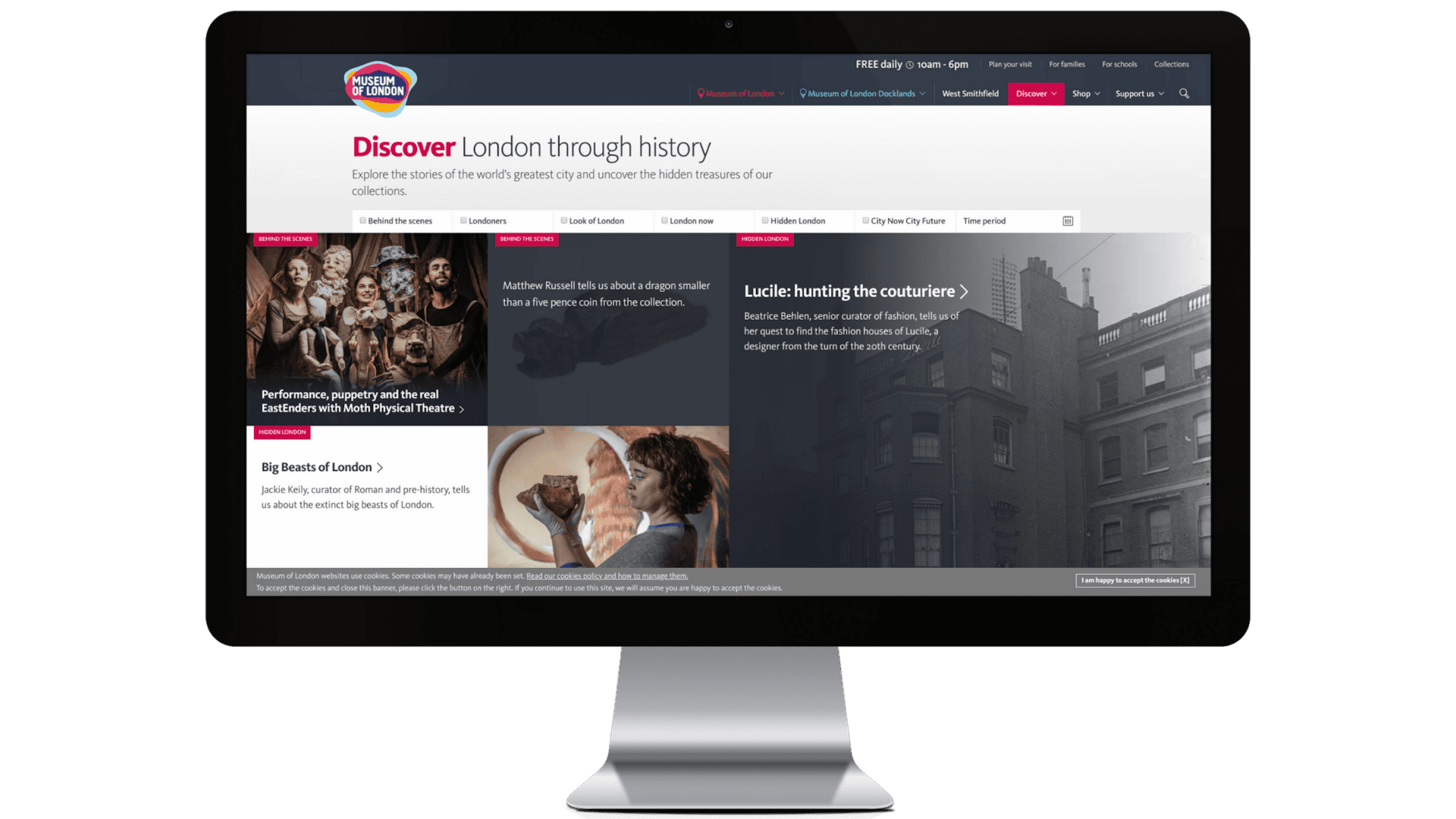
The previous Museum of London website was a few years old, with a dated design that didn't fully showcase the museum's exciting exhibits. Content had accumulated over the years and had spread into multiple microsites, making the museum's online presence difficult to navigate.
It was clear that the new online presence had to:
Effectively serve multiple audiences with the right information, including families, teachers, researchers, and other museum stakeholders.
Create an online museum digital presence that rivals its physical locations.
Align with the museum's long-term strategic objectives and leave room for future growth.
Maximise exposure for the museum's commercial activities, without compromising on the visitor experience.
The previous Museum of London website was a few years old, with a dated design that didn't fully showcase the museum's exciting exhibits. Content had accumulated over the years and had spread into multiple microsites, making the museum's online presence difficult to navigate.
It was clear that the new online presence had to:
Effectively serve multiple audiences with the right information, including families, teachers, researchers, and other museum stakeholders.
Create an online museum digital presence that rivals its physical locations.
Align with the museum's long-term strategic objectives and leave room for future growth.
Maximise exposure for the museum's commercial activities, without compromising on the visitor experience.
WHAT WE DELIVERED
Intelligent Content & Operations
Best Practice & Governance
Digital Strategy Consulting
Digital Roadmap Development
Experience Optimisation
What we did
What we did
We collaborated closely with key stakeholders, holding regular drop-in sessions for museum staff to provide feedback on our IA and designs:
We started by running interactive workshops with key stakeholders to define business goals, and conducting in-depth research with the museum's different user groups to highlight user needs.
This initial research highlighted a lot of areas for improvement, guiding us in creating a new digital strategy and roadmap in line with the business goals and user needs.
The museum has such a wide range of users with unique content needs, so we carried out more in-depth user research. This time we explored users' precise information requirements for the website.
We then ran six separate workshops focusing on content structure and collaboratively prioritising the content. We created a website IA that we then validated with museum visitors through tree testing.
Once the site structure was agreed we designed key pages and a series of flexible templates to be used to create more pages in the future. We ran guerrilla usability testing throughout in-situ at the museum.
Finally, to ensure the new site launches with quality content we created and delivered a bespoke writing for the web training programme for content editors working at the museum.
We collaborated closely with key stakeholders, holding regular drop-in sessions for museum staff to provide feedback on our IA and designs:
We started by running interactive workshops with key stakeholders to define business goals, and conducting in-depth research with the museum's different user groups to highlight user needs.
This initial research highlighted a lot of areas for improvement, guiding us in creating a new digital strategy and roadmap in line with the business goals and user needs.
The museum has such a wide range of users with unique content needs, so we carried out more in-depth user research. This time we explored users' precise information requirements for the website.
We then ran six separate workshops focusing on content structure and collaboratively prioritising the content. We created a website IA that we then validated with museum visitors through tree testing.
Once the site structure was agreed we designed key pages and a series of flexible templates to be used to create more pages in the future. We ran guerrilla usability testing throughout in-situ at the museum.
Finally, to ensure the new site launches with quality content we created and delivered a bespoke writing for the web training programme for content editors working at the museum.
The Results
The Results
The new site structure makes it straightforward for visitors to find important information and get drawn into exploring the museum's collections, exhibitions, and events. At the same time specialist audiences have clearly signposted sections designed for them.
We saw a modest 5% reduction in bounce rates post-launch, as well as a really impressive 45% increase in ecommerce conversions.
The new site structure makes it straightforward for visitors to find important information and get drawn into exploring the museum's collections, exhibitions, and events. At the same time specialist audiences have clearly signposted sections designed for them.
We saw a modest 5% reduction in bounce rates post-launch, as well as a really impressive 45% increase in ecommerce conversions.